
AFRL-SUPPORTED RESEARCH VALIDATES PANX THERMOMECHANICAL SIMULATION FOR CREATING DIGITAL TWINS OF ENTIRE BUILD VOLUMES IN METAL AM
PanOptimization has welcomed the publication of Air Force Research Laboratory-supported research that validates the use of PanX thermomechanical simulation for simulating entire build volumes in metal additive manufacturing (AM).
The paper, entitled “Part scale prediction of residual stress through thermomechanical modeling of additively manufactured Ti-6Al-4V,” was published in The International Journal of Advanced Manufacturing Technology and examines the ability of PanX to predict thermal and mechanical behaviour in LPBF Ti-6Al-4V builds.
For PanOptimization, the research represents a significant demonstration of PanX’s role in addressing one of the central challenges facing industrial AM, namely the need to move beyond trial-and-error builds and toward physics-based models that support qualification, certification, and production reliability.
“There is growing recognition across industry, government, and regulatory bodies that AM cannot reach full industrial maturity without physics-based models that can be trusted,” says Erik Denlinger, Co-Founder and Chief Engineer at PanOptimization. “If simulation can predict the outcome of a build quickly and accurately, it becomes a way to identify and mitigate risk before material, machine time, and production schedules are put at risk. That is exactly where PanX is focused.”
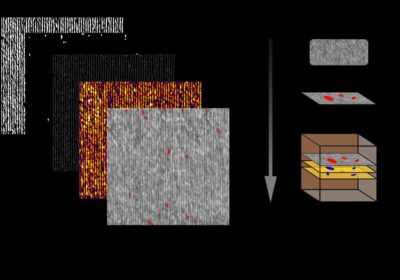
The AFRL-supported research validated PanX thermal and mechanical simulation predictions against experimental results for entire build volumes consisting of multiple parts. This is important because thermal and mechanical interactions occur between parts, loose powder, and the build plate, and these full build-volume effects are critical to understanding build outcome.
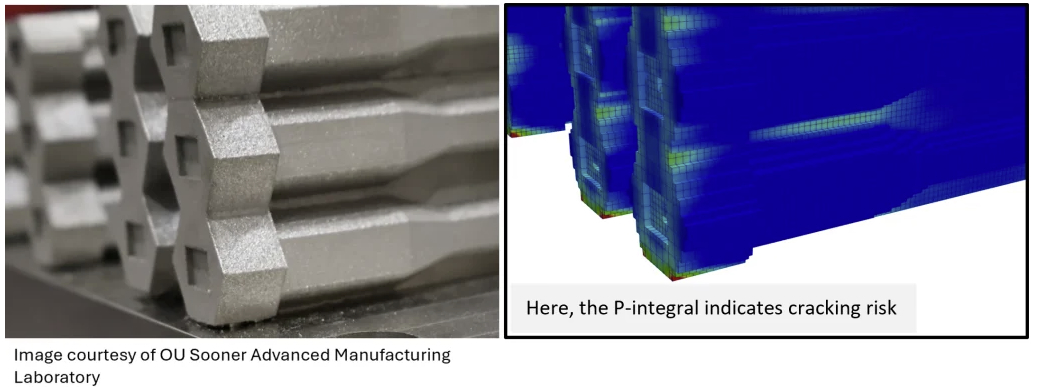
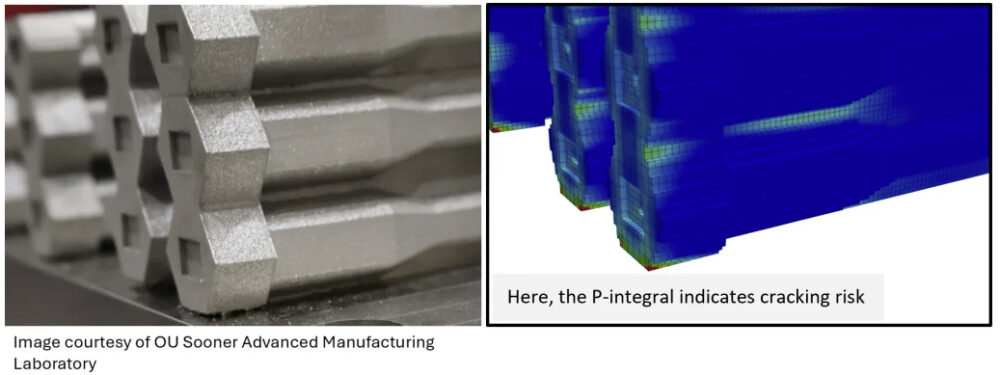
The study found that PanX accurately computed interlayer temperature throughout the print, with errors in the range of 2–14%, and demonstrated the ability to identify crack-risk locations using a novel P-integral approach. It also showed that PanX can account for variable geometries and build layouts, supporting transferability across different geometries, parameter sets, and build layouts.
Denlinger continues, “The accuracy of simulation needs to be validated for it be applied and trusted. The In situ interlayer temperature measurements for full build volumes used in this study are the gold-standard for thermal validation. The work should be extended to include actual energy input and machine timing, which PanX can already integrate with, and which our internal validation efforts have shown this to be critical to further accuracy improvement. PanX’s ability to accurately compute these temperatures is a competitive advantage for us and it enables the optimization of process timing, compensating distortion for tight-tolerances, and many other applications.”
PanX uses a Multi-Grid modelling approach, a novel numerical method that combines the results of a series of transient solutions. PanX can also account for actual machine process timing per layer and energy input across each layer, neither of which was included in the study, meaning the reported thermal prediction error should be viewed as a floor for what PanX is able to achieve.
For manufacturers in aerospace, defense, energy, new-space, and other high-value AM applications, the “so what” is clear. Failed builds and failed qualification are expensive. PanX provides a route to understand build risk before production resources are committed.
As metal AM moves further into production, the ability to simulate entire build volumes accurately, quickly, and with transferable physics is becoming essential. This AFRL-supported research places PanX firmly at the centre of that transition.